Episode Transcript
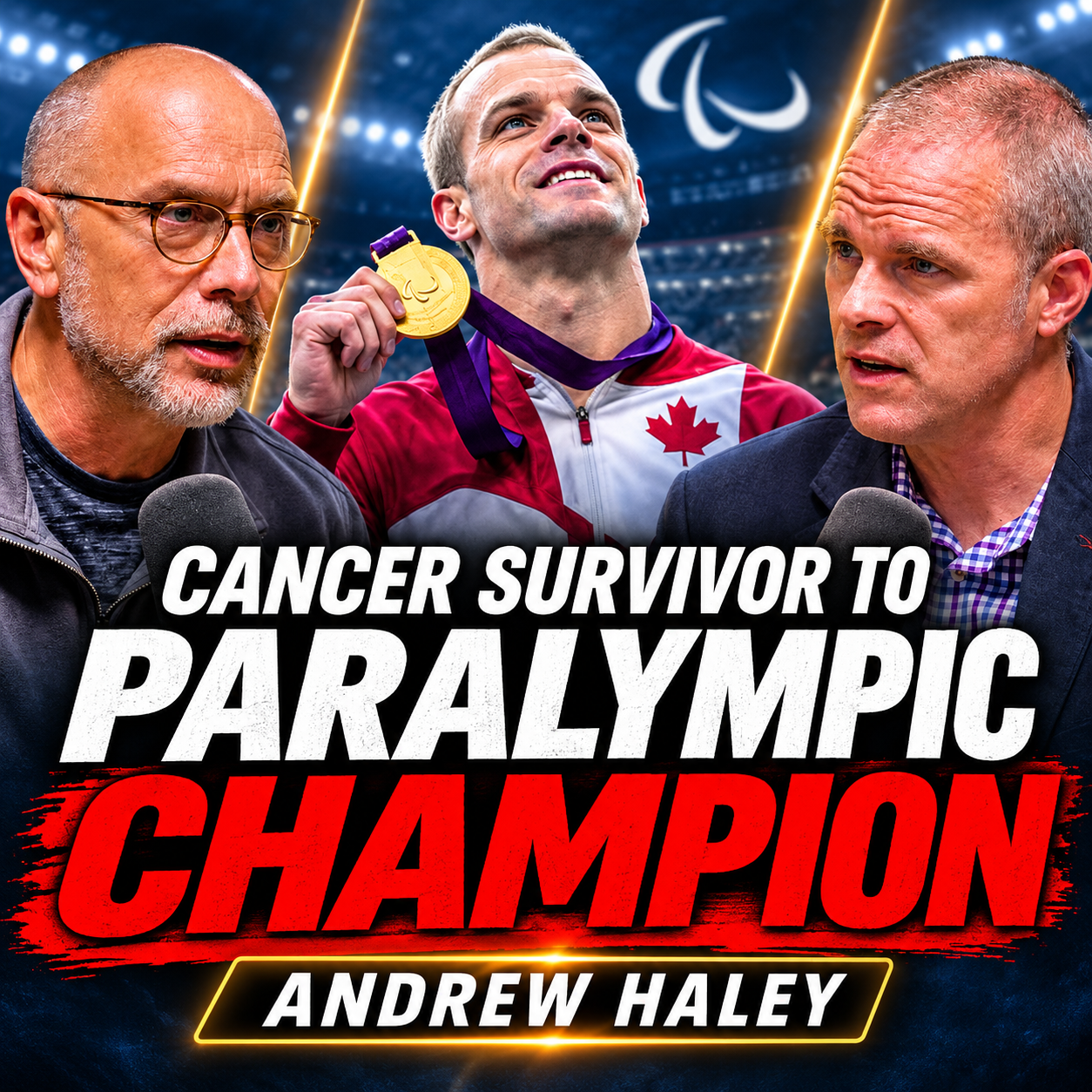
[00:00:05] Speaker A: What makes you an iconic Canadian? Well, many things, but some people can specialize a little bit. Part of it is overcoming some of the challenges life can present. You. This guy survived two childhood cancers.
He participated in the Paralympic Games, and he has won Paralympic medals, one of them a gold medal, representing Canada. And speaking with me today is Andrew Haley. Thanks, Andrew. I appreciate you taking the time here. Now, did I get any of those stats wrong out of the gate?
[00:00:35] Speaker B: No. So far, so good.
[00:00:36] Speaker A: So far so good. Well, I appreciate this because, you know, it's. It's interesting to me to understand the life of an athlete and, you know, a par athlete, even more so because you started life or you had a challenge by the time you're entering that world that has maybe been more than most people think they could overcome, and now rising to the highest levels, competing in the world, which is an incredible thing on its own. But I'd like to understand where that comes from. So if you don't mind, I'm going to go right back in time. I'm going to go back to your childhood for a minute.
And this is devastating. I mean, how old were you when you found out? As I understand it, you had a six. You had a fall. Yeah. At the age of six. And they discovered cancer.
[00:01:21] Speaker B: Yeah. So we thought it was kind of no big deal. Right. Like, I was playing downstairs in our house, my twin brother Brett, and there was no big deal. After I fell, my parents heard a thud, a cry, and came downstairs, picked me up and put me in the family car on the way to the hospital.
We thought that it was just an ordinary break. Yeah. You know, to get to the hospital, and then the doctors go, looking at each other, going, oh, you know, and then having to put me in an ambulance to drive me to Halifax to the IWK to get the specialists to do tests. Then you're like, really? Like, what is going on here? Like, we're in the eye of the storm, which never was there before. Right. And then eventually, not so many years after that, Terry Fox became a big thing, and you're like, what's this happening? So, you know, for me to have cancer in my leg, osteogenic sarcoma, for those who know those terms, and then have the 35% chance to beat it. That was unworldly. Like, why is this happening to me?
[00:02:12] Speaker A: To a little boy.
[00:02:12] Speaker B: To a little boy, and then being told on my birthday, January 16th, well, before my birthday, week before my birthday in early January, I was almost 8 years old. So it was about a year and a half Dealing with the leg. They said, andrew, you have one more chemo treatment left for your, your leg, and then you can go home. And then they came in on my birthday on January 16, 1982, and told my family and I that the cancer had returned again. We thought this was the last treatment and that was in the lungs. So this
[00:02:39] Speaker A: actually really,
[00:02:41] Speaker B: you know, battle there.
[00:02:43] Speaker A: Absolutely, yeah. This really does replicate the Terry Fox experience in a lot of ways, doesn't it?
[00:02:49] Speaker B: It really does. I mean, obviously that's not the way you set it out to be, but, you know, Terry's doing his thing through the early 80s. Me too.
You know, the marathon of hope starts around when I was, you know, dealing with the lung cancer. So it was. I was in the eye of the storm. I didn't know. And then all of a sudden, Terry comes along and, you know, promotes cancer and cancer research and all the phenomenal things he did in his life.
But then I had a choice to make. I'm home. You talked about early part of my life. So I'm home.
I'm eight years old. I've got a prosthetic device that I walk around with. And the choice I had to make was either to feel sorry for myself or make something of my life. And I decided at that young age that if I was going to overcome cancer twice, I was going to make the best of any situation possible. I was playing road hockey, floor hockey, basketball, baseball, tennis, golf. You know, the list goes on and on and on about sports. If I was in a. A team sport, I was picked last and, and I was okay with that. And if I was in an individual sport like golf, not very good, like horrible actually, but I was having fun with it and just. And just kind of trying to be a kid.
And then eventually things, you know, trials and tribulations. No manual in terms of living with a prosthetic leg with, you know, having cancer twice. And then eventually I'm swimming.
[00:04:04] Speaker A: So here you are, kid. You face trauma, life threatening trauma twice.
[00:04:10] Speaker B: Yeah.
[00:04:12] Speaker A: You somehow decided to make the choice at that young age to I guess elevate yourself above all of that and make life the best that you could.
[00:04:25] Speaker B: Yeah.
[00:04:26] Speaker A: Even more so you stayed competitive.
That's an incredible mindset for a young man. What was the support like around you? I've got to say that it sounds like you had the right support around you.
[00:04:37] Speaker B: You know, I did have the right support around me and I don't want to take away from anybody, certainly, but I think a lot of it just comes from inside, you know, I like, yeah, it was bad that I had cancer twice and I lost my leg and, you know, everything that goes with that. I remember walking in snow, and it still happens to this day, like walking in snow and everybody's, like, going by me, you know, because they. They have two anchors, two legs to anchor them on the snow. I have one, and I don't want to fall because I don't have enough pressure on my right leg to be able to do that. So it was difficult. So when you have a disability, anybody watching this knows that when you have a disability, the world changes. You know, we need to react, adapt. You know, there's resilience comes into play. Resilience is not just a word, right. When you have a disability, it's your life.
[00:05:26] Speaker A: It's sort of the key, the. The baseline for everything. It must be.
[00:05:31] Speaker B: It is the baseline. And I just tried to, To. To. To be the best I could. Right. Not feeling sorry for myself. And I don't actually know whether that came. I had certainly had support from my. My family to a twin brother who. Nobody gave me the easy path. Right. And I think that that probably was a good thing. Yeah. And I remember very vividly, and I'll shout out a really good friend of mine, Joe Young, back in North Sydney days, where we started working out when we were like 14, 15 years old, not knowing the swimming was going to become a thing. We were just two friends in the basement lifting weights and trying to be healthy, et cetera, et cetera. You know, Rocky's our favorite movie kind of thing, right? Yeah. And then all of a sudden, the following year in 1989, when I was turning, I would have been 15 years old, then I suddenly started swimming. So I credit him and that. That weight workout early on to help get me going. And honestly. But when I was in the pool, the mindset was I didn't have an artificial leg. I was just me swimming back and forth. And this is coming from somebody who doesn't like some, I don't like others seeing me without. Without my artificial leg on.
[00:06:43] Speaker A: Right.
[00:06:44] Speaker B: But somehow in the pool, in that moment, it didn't care because I lost myself. And the initial start of just learning to swim took precedence over being a competitive athlete. I just enjoyed it so much, and I think that's what led to the love affair that had it for so many years.
[00:07:03] Speaker C: A very quick favor before we continue. A large percentage of you who watch or listen to TPL Media every week aren't subscribed yet. Our simple commitment to you is that if you find value there, if these discussions make you think, if you want our uncensored debates, deeper dives and extended sit downs, head over to TPLMedia CA and subscribe there directly. It takes just five seconds, costs nothing, keeps you informed. So thank you. Now back to the show.
[00:07:34] Speaker A: Okay, so now you're in the pool.
[00:07:36] Speaker B: Yeah.
[00:07:36] Speaker A: You found a zone in which you feel comfortable just being you.
How does it make its way into the competitive world for you?
[00:07:43] Speaker B: Yeah, I kind of got lucky because my. A relative of mine knew the national coast for athletes with a physical disability.
And he gave me a call, it was March break of 1989, and asked me if I wanted to do it. And I declined because I didn't want somebody to see me. I didn't like people seeing me without my artificial leg on. I didn't feel. I'm just going to sound weird. I didn't feel like human enough without the leg on.
[00:08:02] Speaker A: Wow.
[00:08:03] Speaker B: And I had the phobia about that. Right. Like, but poor guy. People like, oh, the poor guy with one leg. I
[00:08:08] Speaker A: got
[00:08:08] Speaker B: you. And then, so I'm in the water. But then I forgot about all that and it was only about just how great I felt not having the artificial leg on, trying my best. This is what I was like prior to losing my leg, Andrew, in the water, whatever. I had to be better.
And then I started to just pick it up and then one stroke led to another stroke and then I got a little bit better. And it's just like things are going well and I'm going to my first national championships and I'm meddling as one of the best in Canada.
And then it start to be like I, I started to believe and I really started to believe. In 1990 at World Championships, my best placing was 10th. But on the plane ride on the way home, this voice inside my head said, andrew, one day you're going to be a champion.
And that was sort of the, the, the catalyst to be like, I believe it. I believed it because I saw paraplegics, quadriplegics, people with one arm, one leg, dwarfs blind. And I knew I belonged in that environment. So then with the benefit of hindsight, say, this is, this is, this could be a thing. I went home and gave everything that I had. Day after day dedicated to the moment. People would say to me, andrew, you sacrificed so much in your life. And my response back would, I didn't sacrifice a day in my career because I was building something that I hope one day. I didn't know it'd be the podium I didn't know it'd be the top of the podium and the world records, the, the titles that I won, so on and so forth. I'm really fortunate and thankful for that.
I just knew that every day I was putting one foot in front of the other and let's see what happens.
[00:09:36] Speaker A: It's really interesting to hear you talk about that journey, only because it's a simultaneous journey. You know, you're getting over the embarrassment. You get in the pool, you feel comfortable. You get in the pool, you feel so comfortable that you want to achieve something. You get to the, you know, to the Worlds and you come back and you saying to yourself, okay, I can do this.
It almost feels like the unknown moved out of the way for you, gave you a Runway at doing some of the best stuff you've ever done in your life. Just by getting there to that point and saying, okay, when I compete, I'm in this, I'm in this like everybody else and I, I can be here.
Was it that just discovery that you think gave you that confidence as you made your way back home?
[00:10:23] Speaker B: I think when I lost my leg, I had. It's going to sound kind of strange to say this, but I had structure. You know, medical appointments, doctors coming in, you know, blood pressure, everything else, I had that structure. And then when I went home, I lost structure. Right. Every day was different. I didn't have, like, there wasn't any routine kind of thing. Yeah, going to school, but that wasn't routine. So when I joined swimming, I got good structure workouts for certain times I had to be there. It allowed me to really departmentalize what I really want it in life. Right. If I was going to go to a workout at 4:40 in the morning, I had to go for 5:30 in the, in the water.
Then I had to go to bed at a certain time. I couldn't watch hockey late at night because I, you know, maybe my favorite team was playing and I wanted to watch them so there was, you could call them sacrifices, you can call them moments that I just wouldn't relent. You know, I wouldn't go to bed late because I didn't want to miss workout the next morning. Because my thought process was that if I miss workout, one of my competitors, which wasn't in Canada,
[00:11:25] Speaker A: they're not missing their work,
[00:11:26] Speaker B: they're not missing their workout.
[00:11:27] Speaker A: Right.
[00:11:28] Speaker B: So therefore I, I convinced myself that it was, that I just didn't have the choice not to go.
And once we get in life so much where it's like I'M just going to take one day off. I'm training for a triathlon. Oh. I'm just gonna take Saturday morning off. Nobody will know. How many times listeners have you heard this thing? Nobody will know. But guess what? You know, I know and I know that people that are training every time and they're probably in a better situation. I am. Because they're outdoors, swimming in a nice pool that they want to go to. Whereas I'm trying to go to a cold pool in the middle of winter. Right. So the odds are stacked against me because I easily could have taken time off, but I didn't.
[00:12:05] Speaker A: You're right, that's a dedication a lot of nationalities don't have to deal with.
[00:12:09] Speaker B: Yeah. I remember in Calgary, I was training in Calgary for a few years and I took my bike on snow packed streets. We don't have that in Toronto. Right. We have streets that if there's snow it kind of, we tend to lose it.
[00:12:19] Speaker A: Yeah.
[00:12:19] Speaker B: But in Calgary it's so cold, there's snow packed streets. And I, and I locked my bike up and the, the bike lock broke after I got out of workout. It was so cold that day.
[00:12:28] Speaker A: Cold.
[00:12:29] Speaker B: We're talking like minus 20, minus 30.
[00:12:31] Speaker A: How do you not get pneumonia in and out of the pool? Well, because I remember saying to my kids, you got to put your coat on as soon as we left the pool. You got to get pneumonia. Yeah, yeah.
[00:12:38] Speaker B: Well, because you're dressed really warm and you do transition.
[00:12:42] Speaker A: Yeah.
[00:12:42] Speaker B: And then, you know, because typically in Calgary I was just there for training. So I'd go home, sleep, recover, and then back again. And that was just, that's just if it doesn't kill you, makes you stronger. That was literally that mentality. And I knew that I was good. I knew that I was going into a good spot and I wanted that for me. But the thing is, is that when I came back from that, that moment where I said I had the voice inside my head, not everybody believed that I was going to be a world champion. Not everybody believed that I could do it. So while I wanted people to, to give me confidence, to give me a high five and a fist pump and let's keep going. Sometimes I had reluctance to support that because they didn't want to see me get hurt.
And I almost didn't even continue my swimming life at the start because the people like, oh, Andrew, you maybe don't do that. You know, you might get hurt or you might, you might lose. And if you lose, can you take it? And so on and so Forth
[00:13:38] Speaker A: could impact you mentally.
[00:13:39] Speaker B: It's like you've already been through so much. Don't do. And then I was like, my coach believed in me, I believed in me. And almost nobody else really gave me that benefit of the doubt. And I almost stopped, but I didn't stop because it's in here where I wanted to be something truly amazing. I didn't know what amazing would be in my keynote speaking. I talk a lot about going after your own gold medal moment. And gold medal moment doesn't have to be winning a gold medal, doesn't have to be on the podium. Have to be whatever your best is.
And for me, I didn't know what my best was, but I wanted to give myself every opportunity to be able to go out and find that and, and really lock it down.
[00:14:16] Speaker A: Well, you continued to be the best over and over and over again between 92 and, you know, the, the last Paralympics that you did, you pulled a gold medal for bronze. You've won three world titles. Stop me anytime.
And you, you had a 35% survival rate based on your illness as a kid. Seems to me that you're pretty strong guy. And the people that doubted that really probably didn't do you an injustice. They loved you and didn't want to see you go through something. I can see that. But also the ability to elevate to a competitive place to begin with and then get competitive on a world scale, I don't think people understand there's another element to this. Maybe you can talk to.
You have to finance this. There is no huge amount of money that we hand out even to our regular, you know, to the regular Olympic crowd out there in Canada.
There are some groups like Jane, that puts out funding to the Olympics and Paralympics, but there's very few opportunities for us to support or take care of our athletes. And often they're left to their own devices financially. You just said you were in Calgary. Who paid for that?
[00:15:36] Speaker B: Yeah, mostly the bank of mom and dad. I mean, I was, I was federally funded. Carding, it's called. So I mean it, it's not enough. I mean, if you want to travel to places, then it's hard. I mean, I got some, I got support thankfully from Swimming Canada and there was a little bit of money there in terms of being able to travel to certain places. I remember going because I had some money left in my account to Bath, England. So that was a lot of fun, even though I was really sick.
And that was another challenge. Like I'm in, I'm in a Workout where I, I should be going to workout. And I'm sick as a dog. Like I'm really sick. Otherwise I shouldn't have been going. But yet I'm going, I'm doing the workouts and then like basically like dead the rest of the day from it. Right. So that's just, but those things happen. Like you have, sometimes you have to persevere. So yes, there was challenges along the way. Thankfully. I don't think I ever missed any competitions. I really wanted to go to because of funding. You know, we kind of made it work in some shape or, or form but, but
[00:16:28] Speaker A: it's a challenge. It
[00:16:29] Speaker B: was a challenge. I, I, I basically stopped swimming because of funding.
You know, I would have liked to continue probably for a couple more years, but I'd work full time there. Like there's just other, other pressures coming in. Especially when you get into your 30s, it's you know, maybe the 20s you can play around with it a little bit. But when you get into your 30s, then it's like, you know, are you going to get married, you're going to have kids, like, you know, there's more responsibilities.
You know, you're not working now. So when you get into the work world, are you a little bit behind because you didn't work for all those years? So I just kind of went with the, went with the flow. It's funny thing, I never really retired, you know, I can't say like you just
[00:17:08] Speaker A: didn't, you just didn't, you made no official. I
[00:17:10] Speaker B: just didn't show up.
[00:17:11] Speaker A: Next one. I wasn't
[00:17:12] Speaker B: there. Yeah, it was hard for me because I, it was my life for so long and now I don't swim as often as I used to. I love swimming outside, but it's, it's for me now, you know, I swim sometimes I'll stop at the end of the pool and have a chit chat with somebody the next lane over and you know, I don't really go by the time anymore. But you know, the joke is the older I get, the better I was, you know, so
[00:17:35] Speaker A: that's amazing. I'm
[00:17:36] Speaker B: gonna use that. So yeah, so that, that and that was true. Right. So, but, but I mean I get now to look back at this gold medal and other medals that I won and just
[00:17:44] Speaker A: hold that up, let's have a look. This is beautiful. Where
[00:17:46] Speaker B: do you want to go?
[00:17:47] Speaker A: Which camera, Nick? This one. There we go.
[00:17:50] Speaker B: Yeah. So this one is, is in Sydney, Australia. You'll see the, the obviously the Opera house and the bridge. A Little bit of creative license. Because if you've been to Australia, you know that they're not really situated like that
[00:18:02] Speaker A: far apart.
[00:18:02] Speaker B: Not far apart. And then. But the cool thing is because I grew up in North Sydney, Nova Scotia, right? So I got to go to North Sydney, Australia. So that was kind of neat for me too. That's
[00:18:12] Speaker A: quite cool.
[00:18:12] Speaker B: But. And then on the back of it has a place for engraving. But we won this as a relay. And, and the, and the really cool thing about winning as a relay is a lot of people may not know this, but the word team is an acronym. So it's together, everyone achieves more. And those four guys, those three other guys with me being able to do our races, you know, I swim the hundred meter butterfly. The other three guys obviously swim the other three race other three strokes. But to win this set a world record was, was a phenomenal way to end an amazing competition in Sydney, Australia. They did, they did second to none. You know, the Paralympics in 2000, tremendous. So a lot of respect for, for the organizers and the Australian people. But then to have this. And the funny thing is that I get to do this now, yes, I want it, but I get to show school kids,
[00:18:58] Speaker A: right?
[00:18:59] Speaker B: You know, and even, even corporate groups, when I go speak to corporate groups, they're still like kid in a candy store, like, seeing the gold medal, like, wow, that is really impressive. Congratulations on that.
Not doing it to show off. I'm doing it to.
We have worlds of possibilities. I went back to school when I was 48, I think to take my MBA. It was a bucket list item of mine and I took it. And now, now I have it. And I think a lot of times they're like, ah, I'm too old for this. Too old for X, Y and Z. Why, why are you too old for xyz? You may not go at the same time you went in your 20s or your 30s, but you can still be better. You can still have your gold medal moment. And so that's. That was. I think
[00:19:38] Speaker A: that people don't realize that experience gives you the best shot at doing things, the best you ever did it in your life.
So you might just do something in your 50s you never dreamt was possible in your 20s.
[00:19:50] Speaker B: Yeah, I mean, sometimes you just have to build up that and take with a grain of salt. You may not be as good as you once were, but you are trying. You're setting a role model for others around you. It's just, that's where it comes from. It's not about you we, in my keynotes, I talk about, we cannot control the outcome. We can only control the process.
So you're not going to be able to control whether you were placing, you were at a triathlon or piano recital or dance recital or like, whatever. You don't control that.
But the way you control the best you can is you give your effort every single time you outwork everybody else. You have no regrets when you get there. And. And when you finally get behind a block, you know, people would say to me, andrew, oh, wow, you went to Sydney, Australia. How did it go? Like, everybody's screaming for the Australians, not screaming for you.
[00:20:38] Speaker A: That's true. How does
[00:20:39] Speaker B: that feel? And it's like I just have. I was behind blocks so often at many different pools I swam in that I'm just focused on my lane. I'm focused. I have. I have the right amount of mental capacity to be able to do what I need to do. And I get in there and I do the job because I know that the pool in Australia, news flash, it's the same length as pools in Toronto and many different other areas. Have you seen the movie Hoosiers?
[00:21:05] Speaker A: Yeah.
[00:21:05] Speaker B: You know what I'm talking about from the basketball court. Right. Perspective. So that. So I knew that there was the same length.
You. You. And then I just told myself that they're all cheering for me.
That just. It kind of worked out,
[00:21:17] Speaker A: to be honest with you. Yeah. That's why I laugh at my own jokes.
[00:21:19] Speaker B: Yeah. Yeah, me too.
[00:21:21] Speaker A: Now, by the way, it is a beautiful medal. And yes, we asked you to bring it because we are like kids in a candy store, too.
[00:21:27] Speaker B: Yeah.
[00:21:28] Speaker A: But now you've, like you say you've turned this into something that's very different than where you began.
You're sharing these philosophies, these experiences, the process that it takes that people might not recognize in themselves. And you do it through the form of guest speaking.
[00:21:47] Speaker B: Yeah.
[00:21:48] Speaker A: Fantastic way to do that.
What are some of the pillars of what you talk about?
[00:21:53] Speaker B: Yeah, so I talk a lot about, obviously, the gold medal moment, but resilience, making sure that you are, you know, you can overcome anything in your life. The determination to keep going. Right. And also that we. The very big component on teamwork, you know, whether it's teamwork in sport, teamwork in life, teamwork in. In business, you know, we have that component, like we've never accomplished. I mean, any of the athletes out there who's ever accomplished anything, anybody who's ever accomplished anything always has somebody backing them up. So we kind of Go through that and just, and making sure that also. And the other thing is that life moves so fast and sometimes we need to slow it down. So just having mechanisms where we can say, okay, right. Life for me was moving really fast when I lost my leg. So I, it's like, okay, hold on. What do I can, what can I control?
What is it that I'm going to be able to be the best at? What am I going to be resilient at? And then going into the businesses and really walking them through kind of a process where they can be the master of their own domain. You know, back in 1992, I was swimming the 4 meter freestyle at the Paralympics and I was going in 10th place. And in the morning preliminaries, the world record holder, the time's really not that important. But it was 4 minutes and 46 seconds. The world record holder went 4:40. My best time was 4:56. Somehow I went 4:46. So I'm second going into finals. Wow. In finals that night, there's only a few athletes supposed to win medals. Iceland, Norway and Germany. Germany. So the story goes. So at the a hundred meter mark, I'm fourth. 200meter mark, fourth, 300meter mark, I am fourth. And that voice comes back in my head and says, andrew, go now. They'll never expect you to go at the 300 meter mark. But the reality is we're all dying. You know, we're, we're, we're feeling a lot of pain because we have 100 meters left to go,
[00:23:40] Speaker A: right?
[00:23:41] Speaker B: And I was ready to unleash, let's call it. But then this, this negative voice comes in, says, don't go now. If you unleash, you could potentially die out. Not die, but you know,
[00:23:52] Speaker A: you could fall.
[00:23:54] Speaker B: You took your, you shot your shot way too early kind of thing. And then this other voice comes as go now. Allow yourself to be great.
And should we all not want that opportunity that we rise to the level of our greatness, of our, of our, of our opportunities instead of falling to the floor of our, of our fears.
So when I talked to and I, and then it happened that I got in for an amazing bronze medal. But then when I talked about gold medal moment, that bronze medal was like, oh my God, like I was, Nobody expected me to win this medal.
[00:24:25] Speaker A: So it was,
[00:24:25] Speaker B: it was just
[00:24:26] Speaker A: every bit as valuable in your spirit world as a gold medal might have been in another day.
[00:24:31] Speaker B: And that's why I try to impart on my audiences, is that we have times in our lives that we can rise to the occasion, but yet somehow we're not prepared. We don't want to. We're scared.
And then. And then they just don't. Right. And you. And you regret.
[00:24:47] Speaker A: It's funny, but I think in all of our lives, we do doubt ourselves in moments that are really critical.
Right?
[00:24:54] Speaker B: Yeah.
[00:24:55] Speaker A: Career, school athletics.
Why do you think that happens?
[00:25:01] Speaker B: I don't know. Just human nature. I think sometimes it's easier just to think about the negative than the positive. But I'm going to give. I'm going to give the audience a little bit of a tip.
So many times, and I was competing, everything seemed to be at stake. You know, what if I lose this? This is at stake. If I, If I, If I don't, you know, get to the level where I think I should be, then I'm not as good as I once was. But what happens if you take a moment and you. And you take stock of the things that are not at stake? Your family, your dog, your fan, your parents, your people at work, whatever the case may be, whoever those groupings are for you that are not at stake. And then when you realize who's not at stake, that gives you foundation to say, like, I'm going to try my best here, but if it doesn't go the way I want it to, I hope it does. I know they still have my back. I know that my son or daughter is going to come give me a hug and I know that my dog's going to lick my face and my friends want me over on a Saturday night to play cards. I know those things are still going to happen and I'm going to be okay with it. Do you want to succeed? Absolutely.
But now when you go after what you want to go after, it's not as life threatening because now, you know, there's some things that are backing you in the corner and I'm going to now compete for them.
[00:26:11] Speaker A: Hey, before we go any further, please hit the subscribe button right now. If you want the raw debates, the full uncut conversations you won't see here, head straight to TPL Media, CA subscribe and lock in your membership. Trust me, you don't want to miss what happens behind the paywall. All right, back to the show. Recently, you know, did a little bit of research. I kind of went back. I think it was a blog post or something on LinkedIn. I went through LinkedIn. Yeah. Anyway, I'm stalking you on LinkedIn. I'm sorry about that, but it's better you find out. But one of the things that I got out of one of your posts was that you and you had this experience. There's the guy that lost his leg.
[00:26:50] Speaker B: Yeah.
[00:26:50] Speaker A: You know, there's the guy that had. There's that kid who had cancer. You know, I remember that feeling when a kid had cancer in my school.
[00:26:57] Speaker B: Yeah.
[00:26:57] Speaker A: We looked at them different, like they were walking ghosts, I'll be honest. Yeah. You
[00:27:01] Speaker B: poor thing.
[00:27:02] Speaker A: Yeah.
[00:27:02] Speaker B: Yeah.
[00:27:05] Speaker A: But you refuse to be identified that way, to be labeled that way. And that you speak about that and that you recognize that, I think is really an important thing that you're sharing with people that you can. You. You can redefine yourself.
It's just the effort and the belief to do it. I thought that was really powerful. Is that something you deliver with students or just with groups in general? It's. Or is that even part of your. Your guest speaking package, as it were?
[00:27:35] Speaker B: Sorry, what part of this?
[00:27:37] Speaker A: Oh, sorry. The.
The. I can go back and re. Ask a question because we're really close here. Sorry, Nick.
One of the things that I read that you. Sort of a blog that you'd put up there was that, you know, you. You can redefine yourself to the world. You don't have to live by the definitions people have placed on you. I would imagine something you discovered as a very young man. Oh, look, there's the kid who lost his leg. There's the kid who had cancer. And, you know, we. We kind of looked at those kids. I remember clearly having, you know, a couple of buddies in high. In high school, and you looked at them like they were ghost walking around us. We didn't see them as having huge amounts of potential. We just worried about them.
[00:28:20] Speaker B: Yeah.
[00:28:21] Speaker A: You redefined that, I would imagine, for many people around you by redefining that for yourself.
[00:28:25] Speaker B: Yeah.
[00:28:26] Speaker A: And you wrote about that recently. Talk to me more about that.
[00:28:29] Speaker B: Yeah, thanks. So, you know, in terms of LinkedIn, I really enjoy writing articles. I think it gives a lot of people, like, motivation. So I encourage people, if they want to kind of subscribe to my newsletter and LinkedIn, I really put a lot of effort into them, and I think that hopefully a lot of people will see themselves in me, but in terms of, like, the younger years, and again, I didn't want to be defined by the kid with one leg. You know, it was ironic that during. During my swim years, my brother was defined as Andrew's brother.
Wow. The swim. The swimmer's brother.
[00:29:02] Speaker A: Yeah.
[00:29:02] Speaker B: Kind of thing. Right?
[00:29:03] Speaker A: Yeah.
[00:29:04] Speaker B: I just wanted to be normal, you know, and I realized I just wrote about this, I think yesterday, today is that I had no chance of being normal. I had no chance of really fitting in. You know, what do you do with one leg? You know, I, I'm different than everybody else.
So you just make the best of the situation that you can make. You know, what's dating like? You know, there's so, there's many different facets of, of, you know, the deck.
[00:29:30] Speaker A: Wait, wait, wait, Andrew, what's dating like?
[00:29:34] Speaker B: Yeah, well, it was, you know, ironically in terms of my career, I was so quote unquote married to the pool that there really wasn't time in the early years into my twenties. You know, I remember one time I was dating this girl, it was in 1994 and Commonwealth Games were in, in Victoria. I just, I was allowed to take like a week off and I took a week off and we went here to Toronto, stayed with some relatives, saw Phantom of the Opera. It was amazing.
And then I didn't really study for a test and I got an F in my exam through university and then I told myself, you know, I can only do a certain number of things. Right. You know, I could do swimming. Right. I can do school. Right.
I can't do, I can't do social life. Right. There's, I, I, I, I mean it's impossible for me to do all three
[00:30:31] Speaker A: well
[00:30:32] Speaker B: so, and I
[00:30:33] Speaker A: wanted
[00:30:33] Speaker B: to really focus
[00:30:34] Speaker A: all three. Heavy loads. Heavy
[00:30:36] Speaker B: loads. Right. So I, it was just difficult because you know, the, she may want to go on a Friday night. I can't.
[00:30:42] Speaker A: Right,
[00:30:42] Speaker B: right. She may want to hang out on Saturday while I'm sleeping in because I got workouts. So it's just, it's that dynamic early on didn't work which ironically I met my wife through swimming so that was kind of worked out. But I think that it's just, I just wanted to be normal knowing that full well that I wasn't actually going to achieve that.
But I had some really great friends and who, who, who gave me a lot of support.
Ironically, back in those 80s and 90 years, 1980, 1990s, knowing somebody with a disability is way different than it is right now. You know, knowing somebody back then, it was like, you almost need to help them, you poor dear, you're not capable. You know, nowadays and nobody knew, really knew the Paralympics were, Nowadays the Paralympics are celebrated. Oh, you have a disability or you, you're not disabled, you're, you're, you're able bodied with a, with a slight limitation, the narrative switched.
[00:31:38] Speaker A: It almost feels like you have limitations doing this. Therefore you have superpowers.
[00:31:43] Speaker B: Yeah.
[00:31:44] Speaker A: Actually, you know what I mean? And I think, I think a lot of people. You're right. People have actually redefined what that feels like to have a friend who's disabled in any way.
[00:31:55] Speaker B: Yeah.
[00:31:56] Speaker A: It's funny because if you grow up, and I bet you had friends that you grew up with that just don't even think about it. Right?
[00:32:01] Speaker B: They don't. And, and that's the thing. Like, I think about it sometimes, but they like, doesn't even cross their mind, even to the point sometimes where my wife forgets what leg it is, you know, so it's like, it's just, it's just not in the psyche of, of, of part of the conversation anymore.
[00:32:19] Speaker A: But that's because of what you did with you, that we don't see that at all.
[00:32:24] Speaker B: No, because I think, I think if you lead with confidence, if you leave with, it's not a big deal to me. Why is it a big deal to you then? People are like, oh, you're right, it's not really a big deal to me either. But if you lead with, I'm kind of shy and I want to show and it's a big deal to me, then you'd be like, I know, I know, it must suck. So
[00:32:42] Speaker A: what? That's a sign of strength, though, to be able to get past that shame, to get past that self doubt and be like, okay, this is me now. So,
[00:32:50] Speaker B: yeah, I mean, there was times where it bothered me, but you know, my parents, like, oh, Andrew, your legs clicking. So what? I don't care. Like, I just don't care. I'm old enough now. It's like, I'm just gonna live my life the best I can and, and try to take the platform that I've been given as a speaker to be able to go into the places that I've been able to go into and share the message of everything that I've overcome and putting it in a way that is relatable to people. Because the reality is they don't know what it's like to win a Paralympic gold medal. They don't know what it's like to win world championships. They don't know what it's like to lose your leg, part of your lung. They don't know.
But the story has to be relatable. And by the end of the conversation, like, I just did a hospital foundation gala in Sudbury a couple weeks ago.
I got a standing ovation at the end of it, and I was very humbled by it. But it's because of how much effort and time I took to get to know the audience. So by the time I'm doing the presentation,
[00:33:45] Speaker A: you were relating. I'm
[00:33:46] Speaker B: relating directly to them and what they would understand, and that was what worked.
[00:33:53] Speaker A: Listen, I. I don't want to keep you and I will. I would love it if you came back because there's going to be topics that we address here on an ongoing basis that have to do with the human condition here in Canada, of which I think you probably have a very good perception of having traveled a lot of Canada, but also having elevated as a representative of our country.
[00:34:13] Speaker B: Yeah.
[00:34:13] Speaker A: On an international basis, which is in itself impressive. But if you don't mind, before you go, there was one story I wanted you to tell.
So you're in Barcelona, you get a bronze.
[00:34:24] Speaker B: Yeah.
[00:34:24] Speaker A: You go to Sydney, you get a gold.
[00:34:26] Speaker B: Yeah.
[00:34:27] Speaker A: And then you set a world record while you're working full time.
Take that one capsule of life and describe for us what it took to go from bronze to gold to setting a world record in that short timeframe.
[00:34:45] Speaker B: So that would have. Sorry, that would have been in bronze to gold. So 92.
I think that we, we try to push ourselves the best we can.
The, the bronze medal was a shock, obviously, you know, in that. In that moment of shock. But it also was an intent, a confidence booster.
[00:35:07] Speaker A: It kind of did ignite.
[00:35:09] Speaker B: Yeah.
[00:35:10] Speaker A: That extra flame.
[00:35:11] Speaker B: But like,
[00:35:11] Speaker A: no pun intended, but many. See what I did there, Nick. Flame. Okay, forget it.
[00:35:15] Speaker B: But many years, you know, after that, it was just trying to. You get in with trying your best, whatever your best is, and, you know, being able to win a gold medal after so many years of trying, whether it's Paralympics or whether it's World Championships. I mean, I'm lucky to have won gold medal at Commonwealth Games, Paralympics, World Championships.
It's just.
It's just that. Do it.
Take a day off after it's done and start working on it for the next time.
[00:35:44] Speaker A: Wow.
[00:35:44] Speaker B: Because it's not easy.
[00:35:45] Speaker A: Right,
[00:35:45] Speaker B: right. To be able to go back to the top of the mountain.
It's not easy. So in that moment, again, you don't control the outcome. You just control your effort and your, you know, what you do. So was I going to. Like, one time I broke the world record, individual medley. I finished second because the person who beat me went faster than me and also broke the world record. So there's going to be. There's going to be moments.
[00:36:11] Speaker A: That's a pretty interesting.
[00:36:12] Speaker B: But we keep moving forward. As long as we keep moving forward and we Keep believing. That's the thing. Like, you need to believe that you can accomplish it 110%.
If there's any doubt, then you gotta ask yourself whether you're in the right business.
You have to believe in it every single step of the way. And in terms of your question about, you know, coming back, I would love to come back and I would even go one step further, that if there's anybody watching that says something that maybe they want to hear us talk about,
[00:36:38] Speaker A: please,
[00:36:38] Speaker B: let's throw it out there. Yeah. And then maybe they'll contact your show and I'll come back and we'll address that, too.
[00:36:43] Speaker A: Also, if you'd like Andrew to come and speak to your group, please don't hesitate. He's a, A really good speaker. And I'll put the information at the, in the description for the show.
In closing, let me just ask you this.
If there was one thing you could say to young Andrew at that moment when you found out you were going to lose a leg, what was the one thing, as an angel coming into that room that you would have said to yourself?
[00:37:11] Speaker B: Well, one thing I said to myself, and this is fact, is, goodbye, toes.
You know, I knew I was losing them, and it's, it's. It's hard because I, I knew that in that moment, they, they prepared me for, for losing it. But I think that in this, in, in the. How bad that was and how much it really affected me in terms of losing my leg at the point in time, I think, I think it's like you lost your leg, but you didn't lose your life. You lost your leg, but you didn't lose your hope. You lost your leg, but you didn't lose the desire to be the best you possibly can be.
You know, while you got dealt bad hand, you are still able to do many great things in life.
And I would dare say that those people. And this is true. Like, one, I remember working when I worked for the Toronto Blue Jays for many years, and I remember after workout one day and I took the, the streetcar down Spadina and I got off at Bremner and I was walking across and there was a little bit of the decline. And I'm kind of like, whoa, whoa. And people are going by me like it's nobody's business.
And I kid you not, my mindset was they're going by me like nobody's business. But did they ever won a gold medal at the Paralympics, World championships, Commonwealth Games, set world records, Been to the places I've been to the answer is no, and I switched it to, you know what? We all have our story, and that's, that's the amazing thing about life. You know, we've, I've shared mine today, and I'm happy to do that, but everybody has their story. Right. And I'm just trying to be as positive as I can be to impact wisdom on others so they can continue living their best life, too.
[00:38:46] Speaker A: Well, you have laid out a life for yourself that is inspirational. Thank you for representing us so well around the world so many times and for being an inspiration to Canadians, you know, who really don't know that they can do the things that they want to do.
[00:39:01] Speaker B: Absolutely. Thanks for having me.
[00:39:03] Speaker A: Thanks, Andrew.